Bees & Wasps
Stinging colonies that peak in late summer.
A wasp nest near a doorway or in a wall void turns an ordinary afternoon into a hazard — especially for anyone with a sting allergy. Wasps also get more aggressive as the season goes on, so a nest that seemed minor in June is a very different problem by September.
Where they come from
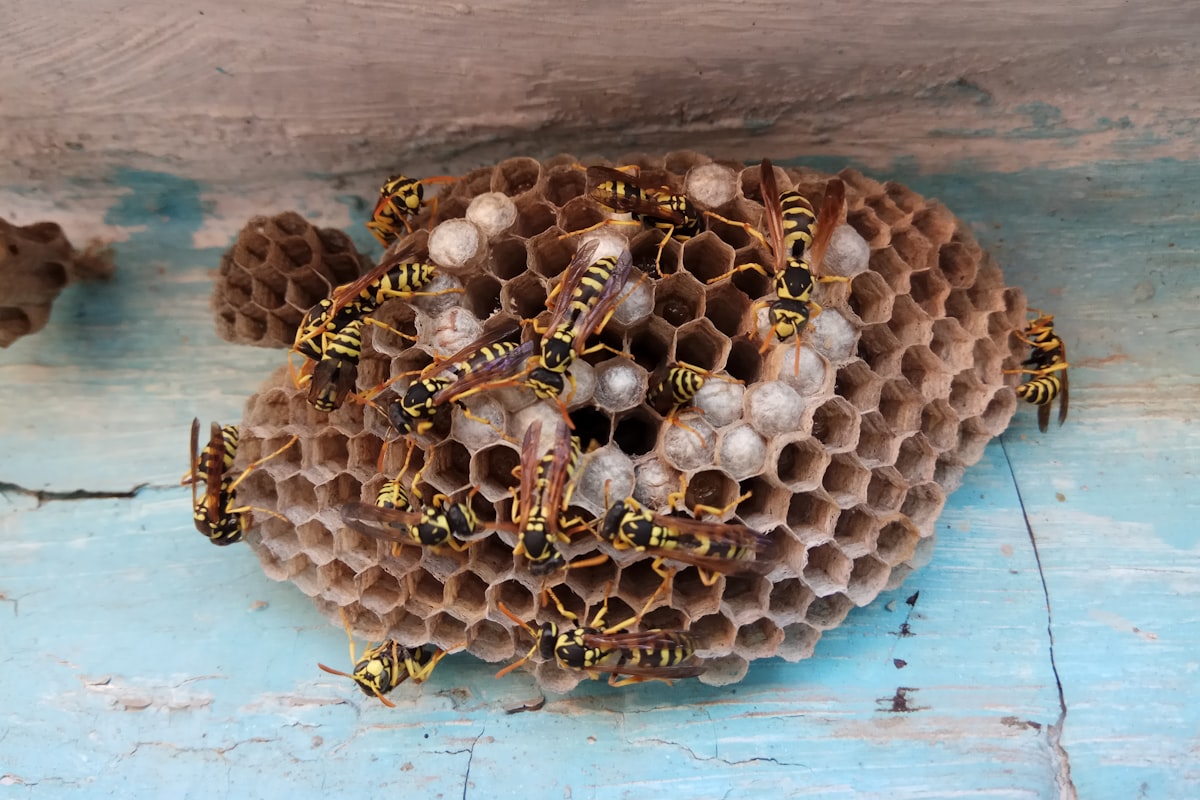
Paper wasps, yellowjackets, and hornets are social wasps that build nests in eaves, wall voids, and underground around local homes. Yellowjackets in particular become bold scavengers in late summer, showing up wherever there's food or sugar outdoors. Honeybees are a different story — as vital pollinators we relocate them alive whenever it's possible rather than exterminate.
Life cycle
Social wasp colonies live for a single year. A fertilized queen overwinters alone, starts a small nest in spring, and builds a worker force through the summer. The colony peaks in size — and in aggression — in late summer and early fall, then produces new queens before the rest of the colony dies off in winter. At its peak a single nest can hold thousands of wasps.
The damage they cause
The main danger is the sting, which is painful for anyone and potentially life-threatening for those with allergies, who can go into anaphylaxis. Nests built in wall voids or attics put the colony inches from living space, and yellowjackets will chew through drywall and wood, sometimes breaking through into a room. Disturbing a mature nest can trigger a swarm of repeated stings.
Warning signs
- Visible paper-comb nests under eaves, in shrubs, or in wall voids
- Steady wasp traffic in and out of a single gap or hole
- Buzzing heard inside a wall or ceiling
- Wasps gathering around trash cans, food, or drinks outdoors
- Ground-nesting yellowjackets emerging from a hole in the yard
We treat and remove nests safely, seal the wall voids and gaps wasps exploit, and — when the colony turns out to be honeybees — refer them for live relocation rather than extermination.
Book your free inspection →