Mosquitoes
Disease vectors breeding in a bottle cap of water.
Mosquitoes have gone from a dusk-only nuisance to an all-day problem in Southern California, thanks to invasive species that bite in broad daylight and breed in the smallest amounts of standing water. Beyond the itch, they're the deadliest disease carriers on the planet.
Where they come from
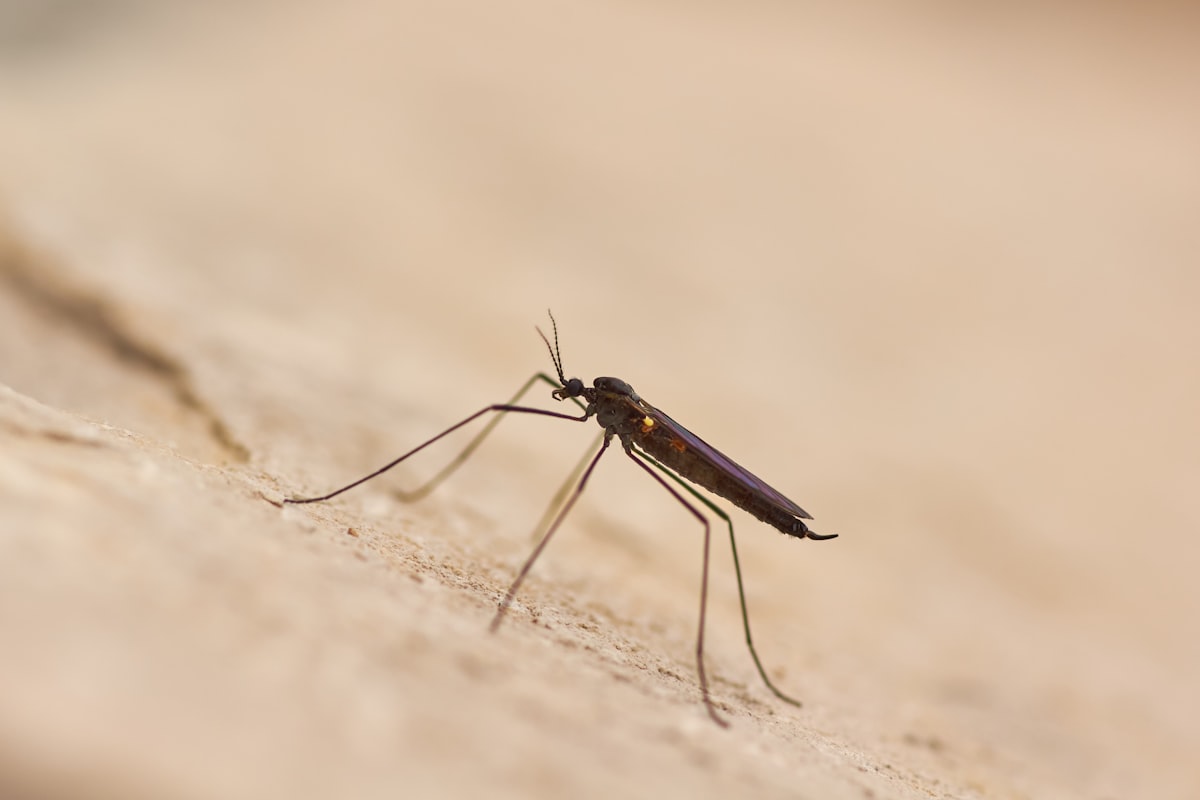
Two invasive species, Aedes aegypti and the Asian tiger mosquito (Aedes albopictus), are now established across California. Unlike the native mosquitoes people grew up with, these are aggressive daytime biters that breed in tiny containers — a saucer under a potted plant, a clogged gutter, a forgotten bucket. Native Culex mosquitoes are still around too and are the main carriers of West Nile virus.
Life cycle
Mosquitoes pass through four stages — egg, larva, pupa, and adult — and every stage but the adult happens in water. Eggs are laid on or near standing water and can hatch in as little as a week; Aedes eggs can even survive dry for months and hatch once they're flooded. Only females bite, because they need a blood meal to produce eggs, and adults live for several weeks.
The damage they cause
The bites themselves are itchy and can make a yard or patio unusable, but the real risk is what mosquitoes carry. They transmit West Nile virus, Zika, dengue, and chikungunya, along with heartworm that's often fatal to dogs. Aedes mosquitoes breeding in local yards raise the disease risk for an entire neighborhood, not just one home.
Warning signs
- Being bitten during the day, not just at dusk (a sign of Aedes)
- Standing water in saucers, gutters, buckets, or plant bases
- Tiny wriggling larvae — "wigglers" — in any pooled water
- Swarms hovering in shady, humid spots around the yard
- Bites concentrated around the ankles and lower legs
The key to mosquitoes is the water, so we start with source reduction — finding and eliminating breeding sites — then add larvicide, targeted adult misting, and an ongoing barrier treatment so you can use your yard again.
Book your free inspection →