Spiders
Mostly harmless — but not the widows.
Most spiders around a home are harmless hunters that actually keep other insects in check. The problem is the two that aren't: the native western black widow and the invasive brown widow, both of which have made themselves at home across Southern California.
Where they come from
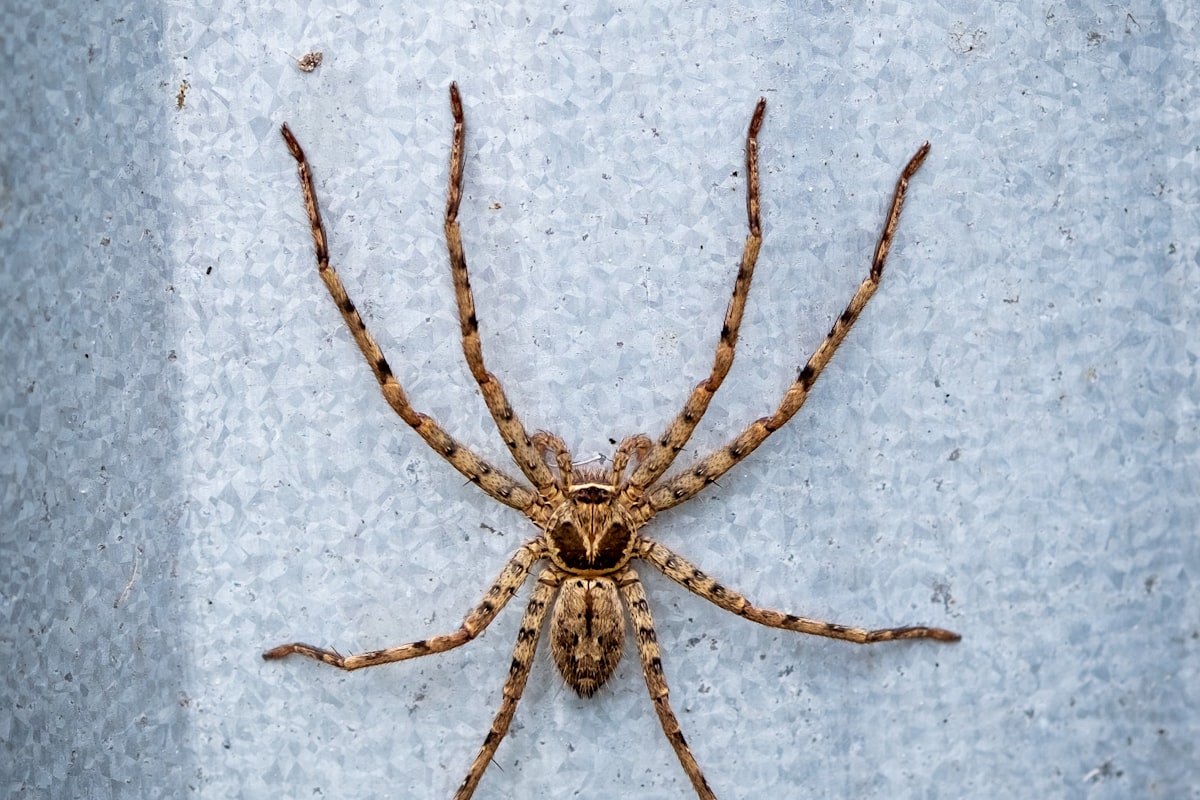
The western black widow is native to the region, while the brown widow is a more recent invader that has spread rapidly through Southern California over the past two decades. Both prefer quiet, undisturbed spots — garage corners, eaves, woodpiles, patio furniture, and the underside of railings and pots. Where insect prey is plentiful, spiders follow.
Life cycle
Spiders hatch from silk egg sacs — a single widow sac can hold hundreds of eggs. The tiny spiderlings often disperse on strands of silk carried by the wind, then molt repeatedly as they grow. Females are the long-lived sex, surviving one to three years, and it's the female widow that builds the tangled, strong-strand webs low to the ground where people and pets encounter her.
The damage they cause
For most species the issue is simply the unsightly webbing that collects on eaves and in corners. Widows are the real concern: their bite is medically significant, causing intense pain, muscle cramps, and nausea. Healthy adults usually recover, but a bite is far more dangerous to young children, older adults, and pets — and no one wants a widow nesting beside the front door.
Warning signs
- Irregular, tangled webs in low, dark, undisturbed corners
- Round, papery egg sacs suspended in webbing
- Shed spider skins near harborage points
- A rise in other insects nearby — the prey that draws spiders in
- The spiders themselves in garages, sheds, and along eaves
We knock down webs and egg sacs, treat the harborage points and entry gaps where spiders shelter, and reduce the insect prey that attracts them — finished with an exterior barrier to keep widows away from doors and play areas.
Book your free inspection →